Dieter Langenecker
Leadership Mentoring


You are more than you think you are

Book Recommendations

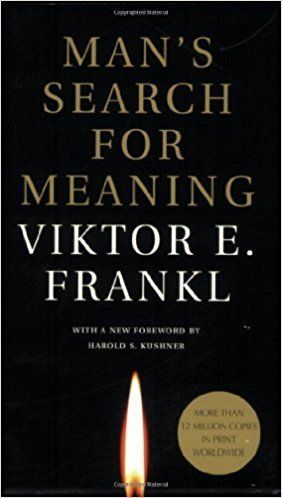
Man's Search For Meaning (Viktor Frankl)

Psychiatrist Viktor Frankl's memoir has riveted generations of readers with its descriptions of life in Nazi death camps and its lessons for spiritual survival. Between 1942 and 1945 Frankl labored in four different camps, including Auschwitz, while his parents, brother, and pregnant wife perished. Based on his own experience and the experiences of those he treated in his practice, Frankl argues that we cannot avoid suffering but we can choose how to cope with it, find meaning in it, and move forward with renewed purpose. Frankl's theory—known as logotherapy, from the Greek word logos ("meaning")—holds that our primary drive in life is not pleasure, as Freud maintained, but the discovery and pursuit of what we personally find meaningful.

At the time of Frankl's death in 1997, Man's Search for Meaning had sold more than 10 million copies in twenty-four languages. A 1991 reader survey by the Library of Congress and the Book-of-the-Month Club that asked readers to name a "book that made a difference in your life" found Man's Search for Meaning among the ten most influential books in America.

Born in Vienna in 1905 Viktor E. Frankl earned an M.D. and a Ph.D. from the University of Vienna. He published more than thirty books on theoretical and clinical psychology and served as a visiting professor and lecturer at Harvard, Stanford, and elsewhere.


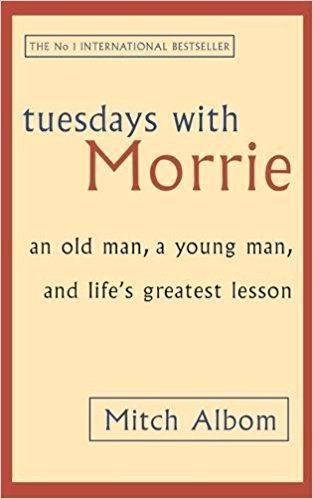
Tuesdays with Morrie (Mitch Albom)

Maybe it was a grandparent, or a teacher or a colleague. Someone older, patient and wise, who understood you when you were young and searching, and gave you sound advice to help you make your way through it. For Mitch Albom, that person was Morrie Schwartz, his college professor from nearly 20 years ago. Maybe, like Mitch, you lost track of this mentor as you made your way, and the insights faded. Wouldn't you like to see that person again, ask the bigger questions that still haunt you? Mitch Albom had that second chance. He rediscovered Morrie in the last months of the older man's life. Knowing he was dying of ALS - or motor neurone disease - Morrie visited Mitch in his study every Tuesday, just as they used to back in college. Their rekindled relationship turned into one final "class": lessons in how to live. This is a chronicle of their time together, through which Mitch shares Morrie's lasting gift with the world.


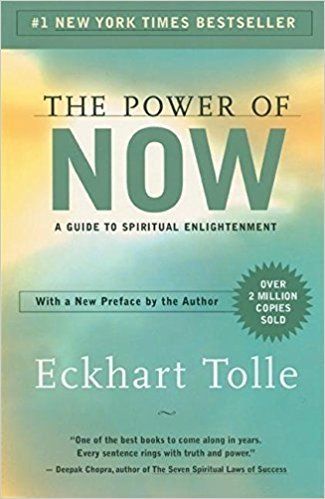
The Power of Now (Eckhart Tolle)

Ekhart Tolle's message is simple: living in the now is the truest path to happiness and enlightenment. And while this message may not seem stunningly original or fresh, Tolle's clear writing, supportive voice, and enthusiasm make this an excellent manual for anyone who's ever wondered what exactly "living in the now" means. Foremost, Tolle is a world-class teacher, able to explain complicated concepts in concrete language. More importantly, within a chapter of reading this book, readers are already holding the world in a different container--more conscious of how thoughts and emotions get in the way of their ability to live in genuine peace and happiness.

Tolle packs a lot of information and inspirational ideas into The Power of Now. (Topics include the source of Chi, enlightened relationships, creative use of the mind, impermanence, and the cycle of life.) Thankfully, he's added markers that symbolize "break time." This is when readers should close the book and mull over what they just read.


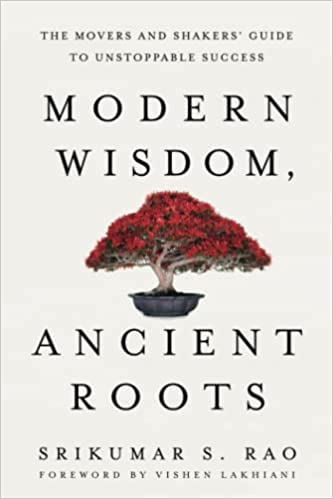
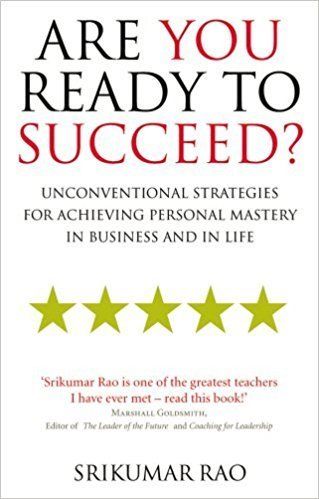
Are You Ready To Succeed? by Srikumar Rao

Srikumar Rao teaches a hugely popular course at both London and Columbia Business Schools. He helps his students define their personal ethics and goals, and how to reach them, and starts them on a journey that will last them a lifetime. Now, in this extraordinary book, Dr Rao's unique approach is available to a far wider audience. Using his own unconventional methods, including exercises and lessons adapted from many traditions, he explains how to: work out who you are, and where you are going; find out how you really view the world; discover the joy of effortless action; sharpen your ability to focus; and, discover true freedom and happiness. "Are You Ready to Succeed?" is in a different league altogether from most business books already on offer. If you too would like to be in another league, this fresh, accessible and groundbreaking guide to a meaningful and successful life is the one for you.


Deutsche Version:
Ich und andere Nebensächlichkeiten

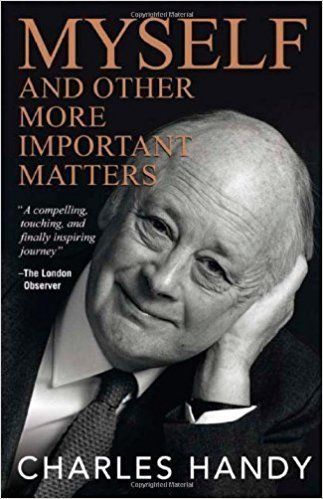
Myself and Other More Important Matters by Charles Handy

One of the world's most influential living management thinkers, Charles Handy has year-after-year been listed alongside business gurus including Peter Drucker and Tom Peters in the prestigious Thinkers 50 list. His views on management -- and life -- have inspired and enlightened others for decades. Now, in Myself and Other More Important Matters, the bestselling author of books including The Age of Unreason shares his special brand of wisdom, giving readers uncommon insight into business and careers...as well as the choices we all have to make in our lives.

Handy draws on the lessons of his own experience to help readers move beyond the facts they learned in business school and reflect on their own individual management style. With the "philosophical elegance and eloquence" Warren Bennis has described as his trademark, Handy discusses how one should develop one’s career goals in line with personal values and sense of ethics. Handy entertainingly recounts what he’s discovered along his own international journey: from lessons his father taught him growing up in Ireland…to what he learned in Borneo in his days working for Royal Dutch Shell… to Italy, where he bought and fixed up an old house in Tuscany…all the way to America, where recent corporate scandals have shaken our understanding of what is ethical and acceptable.

Throughout the book, Handy asks us to look at the role of work in our life, and what we truly find fulfilling. It is hard to imagine a better or wiser guide to work -- and life’s -- big questions.


Authentic Leadership by Bill George

George, a former Medtronic CEO, sets the tone early in his book: "Somewhere along the way we lost sight of the imperative of selecting leaders that create healthy corporations for the long term." It would be wonderful if George then provided readers hungry for change with a blueprint for how this could happen; alas, such is not the case. George's thesis-too many CEOs think only in the short term and of the stock price, eventually losing a company's focus in the hurtling pursuit of Wall Street validation-is not a bad one.. His proposal: a call for "authentic leadership," that is, finding a leader who doesn't try to emulate the greats, because such copycatting will never result in authenticity or honest leadership.


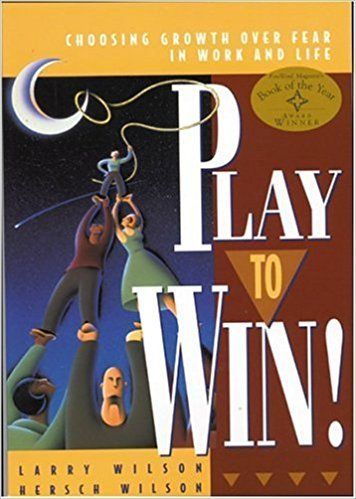
Play to Win: Choosing Growth Over Fear in Work and Life by Larry Wilson, Hersch Wilson

With a nod to Abraham Maslow and his theory of self-actualization, the Wilsons challenge readers to "thrive instead of survive," grow up emotionally and spiritually, and think in new ways. For them winning is not beating out others but avoiding the mindset of simply "playing not to lose." Presented effectively in low-key, straightforward fashion, this book is based on techniques Wilson's firm has developed and utilized in work with more than 500,000 persons.

Very highly recommended.


Presence: An Exploration of Profound Change in People, Organizations, and Society by Peter M. Senge, C. Otto Scharmer, Betty Sue Flowers

Presence can be read as a both a guide and a challenge to leaders in business, education, and government to transform their institutions into powerful agents of change in a world increasingly out of balance. Since business is the most powerful institution in the world today, the authors argue, it must play a key role in solving global societal problems. Yet so many institutions seem to run people rather than the other way around. In this illuminating book, the authors seek to understand why people don't change systems and institutions even when they pose a threat to society, and examine why institutional change is so difficult to attain.

The authors view large institutions such as global corporations as a new species that are affecting nearly all other life forms on the planet. Rather than look at these systems as merely the extension of a few hyper-powerful individuals, they see them as a dynamic organisms with the potential to learn, grow, and evolve--but only if people exert control over them and actively eliminate their destructive aspects. "But until that potential is activated," they write, "industrial age institutions will continue to expand blindly, unaware of their part in a larger whole or of the consequences of their growth." For global institutions to be recreated in positive ways, there must be individual and collective levels of awareness, followed by direct action. Raising this awareness is what Presence seeks to achieve. Drawing on the insights gleaned from interviews with over 150 leading scientists, social leaders, and entrepreneurs, the authors emphasize what they call the "courage to see freshly"--the ability to view familiar problems from a new perspective in order to better understand how parts and wholes are interrelated.

This is not a typical business book. Mainly theoretical, it does not offer specific tips that organizational managers or directors can apply immediately; rather, it offers powerful tools and ideas for changing the mindset of leaders and unlocking the latent potential to "develop awareness commensurate with our impact, wisdom in balance with our power.

Very highly recommended.


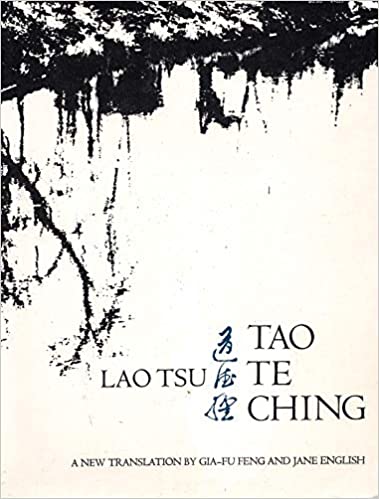
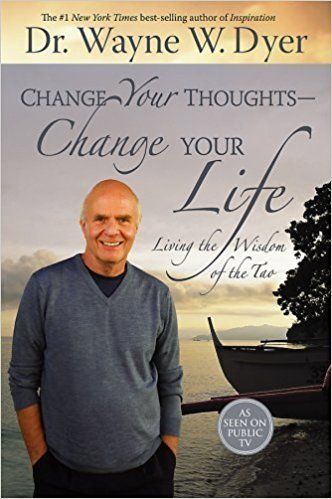
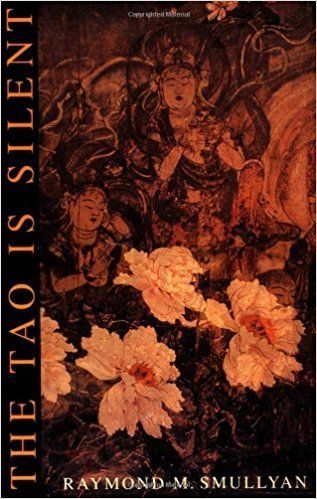
The Tao is Silent

It is not, as Smullyan himself notes, a book about Chinese philosophy, so don't buy it as an introduction to Taoism. Smullyan is not giving an exposition of Eastern religion or philosophy here, although he does include a helpful bibliography for anyone who wants to follow up on that topic. (In fact some of his best essays have at least marginally to do with Western religion.)

This book is a series of essays and reflections inspired by Chinese philosophy -- in particular, inspired by an American mathematical logician's reading of Chinese philosophy. And Smullyan is a delightfully witty and graceful writer, with a vivid sense of (for example) the foolishness of much modern "education," the meaning of "discipline," and the limits of abstract formal logic (which, incidentally, is not identical with "reason").

Not only that, but he is one of few recent writers to explore the "dialogue" as a form of philosophical exposition. One of his finest is in this volume: "Is God a Taoist?" (This one is guaranteed to annoy all the right people.)

The Tao may be silent, but Smullyan, thank goodness, is not. His deft logic, his light touch, and his genial humor will endear him to pretty much any reader, of any religious or philosophical orientation, who approaches the book with an active mind.

(And I do mean "any." I have known the occasional reader who takes Smullyan to be an enemy of religious "orthodoxy," but I frankly see nothing here that justifies that view. More likely somebody is just misunderstanding what "orthodoxy" really is.)

Very highly recommended.


Desiderata: Words for Life

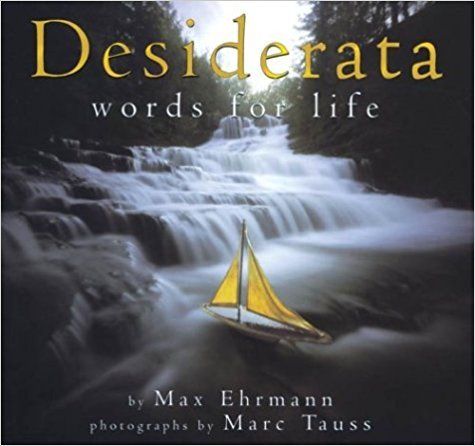
Ehrmann's well-known inspirational work, written in 1927, offers cogent advice on how to live at peace with oneself. This edition is distinguished by Tauss's striking photographs, most of which show children and adults of different cultures. Each of the images captures the essence of the passage it accompanies. For instance, the opening sentence ("Go placidly/amid the noise and haste,/and remember what peace/there may be in silence") is matched with a scene of a deserted city street that brilliantly creates a sense of stillness. Lines on the timelessness of love ("Especially do not feign affection./Neither be cynical/about love; for in the face of all aridity and disenchantment/it is as perennial as the grass") are accompanied by one photo that shows parents and children nestled in bed, and another of them engaged in a pillow fight. Perhaps the most memorable illustration shows a boy and a girl set against a galaxy of stars. This complements the life-affirming statement, "You/are/a child/of the/universe,/no less than the trees and the stars;/you have a right to be here." All of the photos are well composed and have a dreamy quality, suffused with a soft light. However, while the pictures have intergenerational appeal, the vocabulary employed and the philosophy expressed in the text are adult in nature.


Order at hostmanship.com

Hostmanship - The Art of Making People feel Welcome

Hostmanship is a beautiful word – a word that embodies both “welcome” and “let me take care of you”. For us hostmanship is the art of creating hospitality. This art can be exercised towards everyone, regardless of your relationship. You may be dealing with a customer, a patient or a visitor, or even a colleague, a citizen or a partner. It makes no difference. In the world of Hostmanship, we see everyone as guests. And where there is a guest, there is also a host – a host that exercises Hostmanship. Therefore, Hostmanship is a way of approaching people. It expresses a wish to serve others by a serving leadership and an insight that all activities strive to serve others. And in that process we develop both our pride and profit.


Deutsche Version:
Inspirieren statt motivieren! Mit Leidenschaft zum Erfolg - so leben und führen Sie besser

Inspire! What Great Leaders Do

A top business consultant and speaker lights the path to a positive, productive work environment What do the best leaders do to achieve greatness in the modern workplace that is muddled by fear, pressure for productivity, overwork? Inspire! offers business leaders a clear vision of what a positive, productive, inspiring organization looks like in these challenging and chaotic times, and how to get there. The key to extraordinary long--term performance lies in a transformational commitment to inspiring people rather than motivating them. Lance Secretan's Higher Ground Leadership concepts have been widely used to increase profits and quality, slash staff turnover, and achieve record organizational and personal performance. Inspire! describes Lance's breakthrough thinking, often in the words of the pace--setting leaders who are implementing them and building legacies. Countless examples, stories, and case studies demonstrate the magic of these brilliant ideas. Six essential values form the foundation of positive, productive, and profitable organizations and a meaningful and fulfilling life--courage to begin the transformation; authenticity that lets people contribute all of themselves and excel; service that fosters a spirit of cooperation; truth--telling that builds trust and loyalty; love for others that leads to inspired results; and effectiveness, the attainment of results. Inspire! shows leaders in any organization how to foster these essential values that lead to personal and organizational greatness. Lance Secretan (Alton, Ontario, Canada) is one of the world's foremost thinkers on self--improvement and leadership. He is an author, award--winning columnist, philosopher, corporate coach, and a renowned public speaker and business consultant. He served as chairman of the Advisory Board of the 1997 Special Olympics World Winter Games and is also a former ambassador to the United Nations Environment Program.


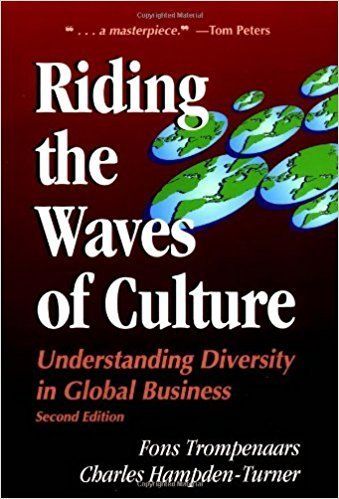
Riding the Waves of Culture

Many managers understand that cultural differences affect the process of doing business, but many underestimate by just how much. This book aims to dispel the idea that there is only one way to manager and encourages readers to get to know their own culture before doing business with others. The author explores the cultural extremes and the incomprehension that can arise when doing business across cultures - even when people are working for the same company. The book explains that there are five key factors or orientations that affect how people all deal with each other, do business and manage. The goal is the "transnational organization" - one in which the company can take from each country what is best, and for those who are sensitive to these differences, the opportunities are enormous. With many practical examples and case studies, this book brings insights to the dilemma of reconciling corporate consistency with local conditions as business life rapidly internationalizes. In 1991 Fons Trompenaars was awarded the International Professional Practice Area Research Award by the American Society for Training and Development (ASTD).


What Were They Thinking?: Unconventional Wisdom About Management by Jeffrey Pfeffer

There is much to laud about the objective perspective that Stanford professor and author Pfeffer brings to business. First and foremost, he calls em as he sees em, showcasing common management errors and building on four years as a Business 2.0 columnist. Trimming employees' compensation and benefits packages? Nothing is gained from that immediate cost savings, except plummeting morale and retention issues—as the airline and auto industries have learned. Thinking about a merger or acquisition? Think again, he urges; it's an easier strategy than fixing operations—but one that more often than not fails. No function or goal of corporate America is left unscrutinized, from strategy to human resources. Yet he softens his radical and common-sense opinions by offering a range of solutions and companies that practice them well. Pfeffer points to Whole Foods, to Larry Culp at Danaher, and to CEO Gary Loveman of Harrah's as leaders who have managed to set corporate priorities and agendas that succeed. Short chapters with clear-cut messages and examples allow time to contemplate and copy.


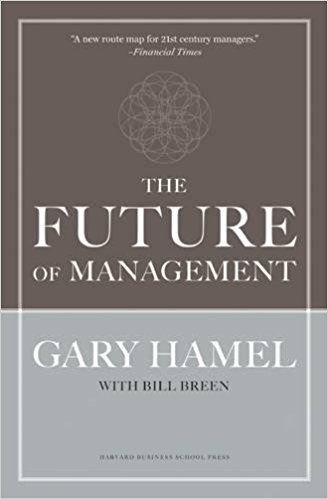
The Future of Management by Gary Hamel

Though this authoritative examination of today's static corporate management systems reads like a business school treatise, it isn't the same-old thing. Hamel, a well-known business thinker and author (Leading the Revolution), advocates that dogma be rooted out and a new future be imagined and invented. To aid managers and leaders on this mission, Hamel offers case studies and measured analysis of management innovators like Google and W.L. Gore (makers of Gore-Tex), then lists lessons that can be drawn from them. He doesn't gloss over how difficult it will be to reinvent management, comparing the new and needed shift in thinking to Darwin's abandoning creationist traditions and physicists who had to look beyond Newton's clockwork laws to discover quantum mechanics. But the steps needed to make such a profound shift aren't clearly outlined here either. The book serves primarily as an invitation to shed age-old systems and processes and think differently. There's little humor and few punchy catchphrases—the book has less sparkle than Jeffrey Pfeffer's What Were They Thinking?—but its content will likely appeal to managers accustomed to b-school textbooks and tired of gimmicky business evangelism.


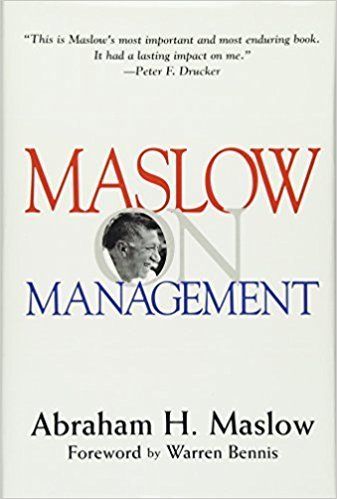
Maslow on Management

Anyone who has sat through a psychology course has seen Abraham H. Maslow's hierarchy of needs, a pyramid capped by the highest human need of all, the need for, what Maslow famously termed, self-actualization. Since his death in 1970, Maslow's voluminous writings have made him one of the most influential thinkers in counseling psychology. He is a revered father figure to the human potential movement. But few know him as a brilliantly insightful analyst of how to lead people and make organizations more productive. Maslow on Management should change that.

In 1962, Maslow spent the summer at an electronics factory that was one of the first to try giving workers a say in organizing production. He watched and kept a journal, later published under the intimidating title Eupsychian Management. The book, which had been long out of print, has been republished with extensive commentaries as Maslow on Management.

Some of Maslow on Management is, as Warren Bennis writes in the foreword, "hilariously innocent." Reflecting on the power of well-managed workplaces to unleash creativity, Maslow suggests that the U.S. economy would benefit "if we kept all the factories running at full blast and simply gave things away." Yet his deeper point--that good management leads to good psychological health--is startlingly advanced for 1962, when the business world was still widely thought of as nurturing nothing more than soulless conformity. He was surprisingly prescient, too, in warning that participatory management taken to excess becomes sloppy and weak. While encouraging open communication, an effective leader "should have the power and the ability to keep his mouth shut," Maslow writes. He advises that gentle, permissive management is fine if workers share democratic values, but if not, "break their backs immediately."

Full of rambling, half-finished thoughts and provocative speculations, Maslow on Management is no nine-step plan for building winning work teams. But anyone seriously interested in understanding management will find the book useful as a fascinating reflection of a brilliant mind thinking deeply about the nature and purpose of work


© 1996-2012 Dieter Langenecker
Leadership Mentoring
In der Ey 22, Postfach 578
CH-8047 Zürich, Schweiz
Tel/Fax: +41 (0)44 355 3737
eMail: we4u@langenecker.com


Home